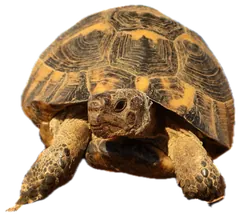
 Tortoise
What can a tortoise eat?
11 foods checked against vets’ sources: what’s fine, what only now and then, and what never.
Every day
Mostly pesticide-free wild weeds and flowers: dandelion, clover, plantain, chickweed, sow thistle, white dead-nettle. Very little fruit; no peas or green beans (too much protein), no cabbage, broccoli or spinach; no lettuce. Calcium: cuttlebone grated over the food; vitamin and mineral powder on the food 2–3 times a week (the RSPCA says a light sprinkle every day). Clean water at all times, in a shallow dish.
No food matches: if it isn’t on the list, ask your vet before giving it.
Never
Cabbage, broccoli and kaleNo
They stop the tortoise absorbing calcium properly, which it needs for its shell and bones.
Source: Tortoise Protection Group: Hermann’s tortoise care sheet (2014)
Fruit (including strawberries and tomatoes)No
It upsets the gut and causes loose droppings: best not to give it.
Source: Tortoise Protection Group: Spur-thighed tortoise care sheet (2014)
Lettuce (especially iceberg)No
It's almost all water: it provides very little nutrition.
Meat and dog or cat foodNo
Tortoises eat plants: too much protein makes them ill, especially when young.
Source: British Chelonia Group: Caresheet for Mediterranean tortoises
Peas and green beansNo
They're too high in protein for a tortoise: they can harm it, especially when young.
Spinach and chardNo
They're high in oxalates, which bind calcium and stop it being absorbed.
Source: Tortoise Protection Group: Hermann’s tortoise care sheet (2014)
Tortoise pelletsNo
The TPG advises against them: they're too high in protein and nothing like what a tortoise would eat in the wild.
Source: Tortoise Protection Group: Hermann’s tortoise care sheet (2014)
Fine
Cuttlefish boneYes
It provides calcium and helps keep the beak trimmed.
How much: Always available; the RSPCA also suggests grating a little onto the food.
Source: Tortoise Protection Group: Hermann’s tortoise care sheet (2014)
Flowers (hibiscus, nasturtium, campanula, rose)Yes
Many garden flowers make excellent food: hibiscus is a favourite.
Source: Tortoise Protection Group: Hermann’s tortoise care sheet (2014)
Grape and mulberry leavesYes
The leaves (not the fruit) are among the foods Hermann's tortoises enjoy.
Source: Tortoise Protection Group: Hermann’s tortoise care sheet (2014)
Wild weeds (dandelion, clover, plantain, chickweed, sow thistle)Yes
They're its real food: plenty of fibre, minerals and vitamins, little protein and fat. As much variety as possible, picked where no weedkillers are used.
How much: Young tortoises daily, adults every other day (RSPCA); for hatchlings, about as much as would cover the shell (TPG).
When to call the vet Emergency: who to call
What other pets can eat
Rabbit Guinea pig Hamster Pet rat Ferret Canary Budgies Cockatiel Lovebirds Red-eared slider Leopard gecko Bearded dragon Goldfish Betta fish Dogs and cats: can my pet eat it?
Sources
- RSPCA: Mediterranean tortoises: care sheet (checked on October 14, 2026)
- Tortoise Protection Group: Hermann’s tortoise care sheet (2014) (checked on October 14, 2026)
- Tortoise Protection Group: Spur-thighed tortoise care sheet (2014) (checked on October 14, 2026)
- British Chelonia Group: Caresheet for Mediterranean tortoises (checked on October 14, 2026)