How much should your pet eat?
Pick who lives with you. Calories and the amount of its food for dogs and cats; for the others, what they eat, how much and how often, from vets’ care sheets.
Who lives with you?
Small mammals
Spiders
Tap your pet: what it needs shows up below.

Dog
For your dog there are the calories and the amount of its food, read from the label.

Cat
For your cat there are the calories and the amount of its food, read from the label.

Rabbit
- What it eats
- hay and grass: about 85% of the diet
- How often
- Adults: every day
- How much
- Every day, a pile of good hay as big as your rabbit, and hay always available (85% of what it eats); a large handful of washed leafy greens (10%); pellets only 25 grams, about an egg cup, per kg of body weight (5%).
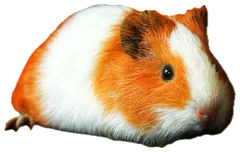
Guinea pig
- What it eats
- hay, fresh pellets and vegetables every day
- How often
- Juveniles, up to 6 months (alfalfa hay and pellets for young guinea pigs): every day
- Adults: every day
- How much
- Grass hay always available: it's the biggest part of the diet. Every day, fresh vegetables and a new portion of guinea pig pellets, as the bag says (don't just top up the bowl: vitamin C breaks down). Vitamin C: at least 10 mg per kg of body weight a day, 30 mg if pregnant.

Hamster
- What it eats
- hamster mix and a few vegetables
- How often
- Adults: every day
- How much
- Hamster pellets as the base (better than mixes, where it picks only the sweet bits), plus a teaspoon or two of vegetables, fruit and herbs a day, and timothy hay. Not much fruit: sugar makes it fat. Remove leftover food every day.
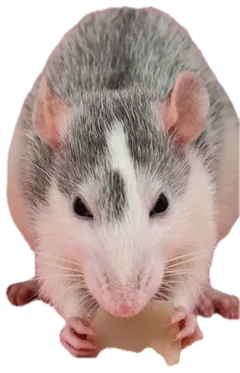
Pet rat
- What it eats
- rat pellets plus a little fruit and vegetables every day
- How often
- Adults: every day, 2 meals a day
- How much
- Rat nuggets weighed out every day, following the amount on the bag, split between morning and evening. Only a little fruit and vegetables, as part of the day's allowance, not on top of it. If food is left over or the rat is getting fat, give a bit less.

Ferret
- What it eats
- meat-based ferret food, always available
- How often
- Adults: every day
- How much
- Meat-based ferret kibble (35–40% protein, low in carbs and fiber): weigh out the day's portion and leave it out, so it can eat whenever it wants. Treats only meat or egg, like a bit of cooked chicken or hard-boiled egg. No sugar, fruit, vegetables or dairy.
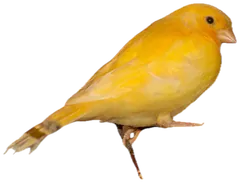
Canary
- What it eats
- 1–2 teaspoons of seed a day, plus vegetables and cuttlebone
- How often
- Adults: every day
- How much
- One to two teaspoons of good-quality seed per canary a day (or complete pellets, which the RVC says are better balanced), plus fresh herbs and vegetables, very little fruit, a cuttlebone for calcium and a little grit. Remove old food every day.
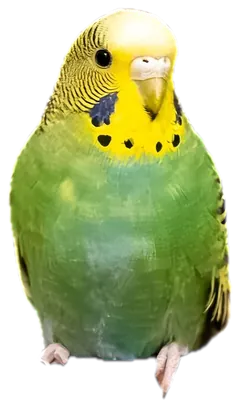
Budgies
- What it eats
- budgie mix, vegetables; never avocado
- How often
- Adults: every day
- How much
- Budgie pellets always available (about 80% of what it eats) plus a few seeds every day: on pellets alone, budgies can get kidney problems. The rest fresh vegetables (kale, carrot, sweet potato): fruit and veg no more than a quarter of the diet. Never avocado, chocolate, caffeine, alcohol or salty food.
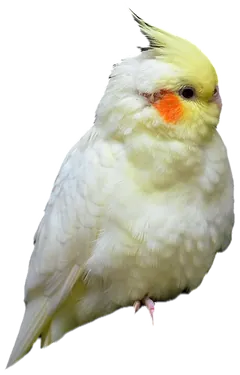
Cockatiel
- What it eats
- pellets and seeds, with fresh vegetables and fruit every day
- How often
- Adults: every day
- How much
- Cockatiel pellets for 60–80% of what it eats, plus a few seeds every day (on pellets alone they can get kidney problems). The rest fresh vegetables (peas, broccoli, kale, carrot): fruit and veg no more than a quarter of the diet. Never avocado, chocolate, caffeine, alcohol or salty food.
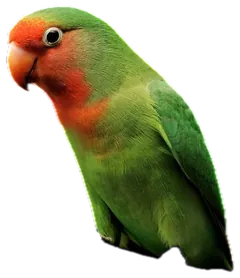
Lovebirds
- What it eats
- pellets and fresh vegetables every day, few seeds
- How often
- Adults: every day
- How much
- Small-parrot pellets always available as the base (about three quarters of the diet) plus a few seeds every day: on pellets alone they can get kidney problems. The rest fresh fruit and vegetables, no more than a quarter. Never avocado, chocolate, caffeine, alcohol or salty food.
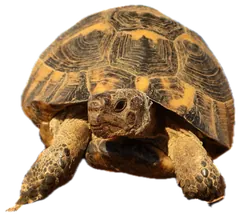
Tortoise
- What it eats
- wild weeds, flowers and grass; little supermarket produce
- How often
- Juveniles: every day
- Adults: every 2 days
- How much
- Mostly pesticide-free wild weeds and flowers: dandelion, clover, plantain, chickweed, sow thistle, white dead-nettle. Very little fruit; no peas or green beans (too much protein), no cabbage, broccoli or spinach; no lettuce. Calcium: cuttlebone grated over the food; vitamin and mineral powder on the food 2–3 times a week (the RSPCA says a light sprinkle every day). Clean water at all times, in a shallow dish.
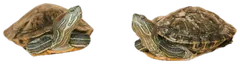
Red-eared slider
- What it eats
- every day when young, every 2–3 days as an adult
- How often
- Juveniles: every day
- Adults: every 2–3 days
- How much
- Only what it eats in a few minutes (the RSPCA says 5, ARAV up to 15), then net out the leftovers: it always begs and gets fat. More protein when young; as an adult, half or more chopped greens (kale, dandelion, watercress, zucchini) and the rest turtle pellets plus earthworms or small fish. Feed it in a separate tub. Cuttlebone for calcium.

Leopard gecko
- What it eats
- insects, every 2–3 days as an adult
- How often
- Juveniles: every 1–2 days
- Adults: every 2–3 days
- How much
- Live insects (crickets, locusts, worms) no longer than its head and about half as wide: only as many as it eats in 15 minutes, then remove the rest. Feed the insects for 24 hours before offering them and dust them with calcium at least 3 times a week; twice a month use a multivitamin instead of calcium. Waxworms only now and then: they're fatty.
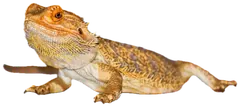
Bearded dragon
- What it eats
- insects no bigger than its mouth, plus greens; adults about 60% greens. In the morning
- How often
- Babies: every day, 2–3 meals a day
- Juveniles: every day, 1 meal a day
- Adults: every day, 1 meal a day
- How much
- In the morning. When young, about 65% insects and 35% greens; when grown (over 30 cm, about 12 in), about 40% insects and 60% greens. Insects no bigger than its mouth, that is, no longer than the space between its eyes; for adults 3–4 times a week. Mixed leafy greens (dandelion, arugula, watercress), very little fruit, no spinach. Remove leftovers every day.
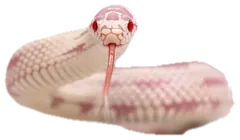
Corn snake
- What it eats
- thawed frozen prey, every 7–14 days as an adult
- How often
- Babies: every 5–6 days
- Juveniles: every 5–7 days
- Adults: every 7–14 days
- How much
- One frozen-thawed mouse of the right size, slightly wider than the widest part of its body: a newborn pinkie when small, then bigger as it grows. Now and then a quail or a rat for variety. Offer food with tongs and don't handle it for 48 hours after a meal.
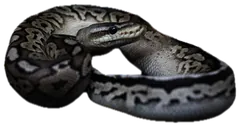
Ball python
- What it eats
- thawed frozen prey, every 7–14 days as an adult
- How often
- Babies: every 5–6 days
- Juveniles, up to 2-3 years: every 7–10 days
- Adults: every 7–14 days
- How much
- One frozen-thawed prey item (mice or rats) per meal, about as wide as the widest part of its body: the RSPCA says slightly wider, ARAV says no wider. Never live prey. Offer it with tongs and don't handle the snake for 48 hours after a meal, or it may bring it up.
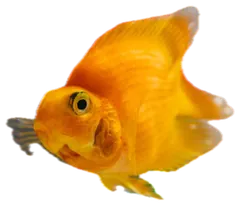
Goldfish
- What it eats
- food made for goldfish
- How often
- Adults: every day, 1 meal a day
- How much
- Once a day, only what it eats in under 2 minutes: it would eat all day, but leftover food poisons the water. Goldfish food; for fancy goldfish (short, round body), sinking pellets, not flakes. With several fish, put food in two spots. Below 8 °C (46 °F), feed less.
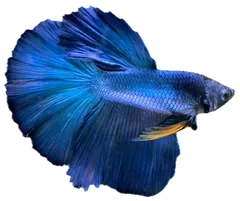
Betta fish
- What it eats
- a little, once a day
- How often
- Adults: every day, 1 meal a day
- How much
- Once a day, only what it eats in under 2 minutes: leftover food fouls the water. Betta pellets or flakes, and now and then small live or frozen foods (daphnia, bloodworms).
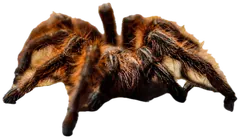
Tarantula
- What it eats
- live insects, once or twice a week; remove leftovers
- How often
- Adults: every 4–7 days
- How much
- Farm-raised live insects, like crickets and locusts, no longer than half its body: 3 to 5 at a time, once or twice a week. Remove the ones it doesn't eat (after about 10 minutes, or an hour at most): hungry insects can bite it. No pinkie mice or meat.
Always ask your vet: this site helps you understand, it doesn’t replace a checkup.
Sources
All 60 sources, pet by pet
- RSPCA, Rabbit diet (checked on October 13, 2026)
- RSPCA, Rabbit environment (checked on September 30, 2026)
- PDSA, How long do pets live? (checked on September 30, 2026)
- Rabbit Welfare Association & Fund, Vaccines (checked on September 30, 2026)
- Merck Veterinary Manual, Housing and Nutrition of Guinea Pigs (checked on October 13, 2026)
- RSPCA, Guinea pig diet (checked on October 13, 2026)
- Merck Veterinary Manual, Routine Care of Guinea Pigs (checked on October 13, 2026)
- Merck Veterinary Manual, Nutritional Problems of Guinea Pigs (checked on October 13, 2026)
- RSPCA, Guinea pig health (checked on September 30, 2026)
- PDSA, Guinea pig health (checked on September 30, 2026)
- Merck Veterinary Manual, Description and Physical Characteristics of Guinea Pigs (checked on September 30, 2026)
- PDSA, Hamsters as pets (checked on October 13, 2026)
- RSPCA, Hamster diet (checked on October 13, 2026)
- RSPCA, Hamster environment (checked on September 30, 2026)
- Merck Veterinary Manual, Description and Physical Characteristics of Hamsters (checked on September 30, 2026)
- RSPCA, Rat diet (checked on October 13, 2026)
- PDSA, Rats as pets (checked on October 13, 2026)
- RSPCA, Rat environment (checked on September 30, 2026)
- National Fancy Rat Society, Keeping rats as pets (checked on September 30, 2026)
- PDSA, Ferrets as pets (checked on October 13, 2026)
- Merck Veterinary Manual, Management of Ferrets (checked on October 13, 2026)
- American Ferret Association, Frequently asked questions (checked on October 13, 2026)
- RSPCA, Ferret environment (checked on September 30, 2026)
- Deutscher Tierschutzbund (German Animal Welfare Federation), Canaries (checked on October 13, 2026)
- Royal Veterinary College, Canary care and advice (2022, PDF) (checked on October 14, 2026)
- Merck Veterinary Manual, table “Popular Pet Birds” (checked on October 13, 2026)
- Association of Avian Veterinarians, Basic Care for Companion Birds (PDF) (checked on October 13, 2026)
- Merck Veterinary Manual, Feeding a Pet Bird (checked on October 13, 2026)
- Royal Veterinary College, Budgerigar care (2024, PDF) (checked on October 14, 2026)
- RSPCA, Pet birds: environment (checked on September 30, 2026)
- Royal Veterinary College, Cockatiel care (2022, PDF) (checked on October 14, 2026)
- University of Florida College of Veterinary Medicine, How to care for your pet bird (checked on October 14, 2026)
- Association of Avian Veterinarians, Signs of illness in companion birds (PDF) (checked on September 30, 2026)
- RSPCA, Handle with care: Spur-thighed, Hermann's, marginated and Horsfield's tortoises (PDF) (checked on October 13, 2026)
- British Chelonia Group, Care sheet for Mediterranean tortoises (checked on October 13, 2026)
- Merck Veterinary Manual, Table: Important Husbandry Requirements for Selected Reptiles (checked on September 30, 2026)
- Italian Ministry of the Environment (MASE), guidelines on land tortoises (2019) and CITES note of 4 March 2026 (checked on October 13, 2026)
- Italian Ministry of the Environment (MASE), CITES note of 4 March 2026, and Regulation (EU) 2026/1383 (checked on October 13, 2026)
- Association of Reptile and Amphibian Veterinarians (ARAV), Red-Eared Sliders, Companion Reptile Care Series (PDF, copy on a veterinary clinic website) (checked on October 13, 2026)
- RSPCA, Terrapin care (checked on October 13, 2026)
- Regulation (EU) No 1143/2014 on invasive alien species (arts. 7 and 31) and Implementing Regulation (EU) 2016/1141 (Union list) (checked on October 13, 2026)
- Association of Reptile and Amphibian Veterinarians (ARAV), Leopard Geckos, Companion Reptile Care Series (PDF, copy on a veterinary clinic website) (checked on October 13, 2026)
- RSPCA, Leopard gecko care (checked on October 13, 2026)
- Association of Reptile and Amphibian Veterinarians (ARAV), Bearded Dragons, Companion Reptile Care Series (PDF, copy on a veterinary clinic website) (checked on October 13, 2026)
- RSPCA, Bearded dragon care (checked on October 13, 2026)
- RSPCA, Corn snake care (checked on October 13, 2026)
- Association of Reptile and Amphibian Veterinarians (ARAV), Corn Snakes, Companion Reptile Care Series (PDF, copy on a veterinary clinic website) (checked on October 13, 2026)
- RSPCA, Royal python care (checked on October 13, 2026)
- Association of Reptile and Amphibian Veterinarians (ARAV), Ball Pythons, Companion Reptile Care Series (PDF, copy on a veterinary clinic website) (checked on October 13, 2026)
- Italian Legislative Decree 135 of 5 August 2022, art. 3 (wild-caught exotic animals) (checked on October 13, 2026)
- RSPCA Australia, How should I care for my goldfish? (checked on October 13, 2026)
- OATA, How to look after goldfish in an aquarium (checked on October 14, 2026)
- RSPCA, Fish (checked on September 30, 2026)
- Merck Veterinary Manual, Routine Health Care of Fish (checked on September 30, 2026)
- RSPCA Australia, How should I care for my Siamese fighting fish? (checked on October 13, 2026)
- OATA, How to look after Siamese fighting fish (bettas) (checked on October 14, 2026)
- RSPCA, Fish environment (checked on September 30, 2026)
- University of Kentucky Entomology, Exotic bugs: care and feeding (checked on October 13, 2026)
- University of Illinois College of Veterinary Medicine, Caring for pet tarantulas (checked on October 13, 2026)
- Royal Veterinary College, Tarantula care (2024, PDF) (checked on October 14, 2026)