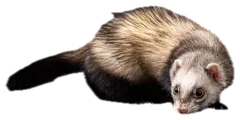
Ferret: lifespan, size, diet and care
Ferrets don’t sweat: above 27 °C (81 °F) they’re at risk. In summer they need shade and cool spots.
Take the quiz: is it right for you?
How big it is
An adult is up to 40.6 cm (16 in) long, head and body.
Zoomed ×4: here you see the man up to 47.5 cm (19 in) off the ground
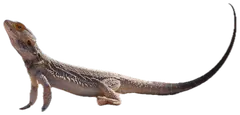 1Bearded dragonlong 61 cm (24 in)
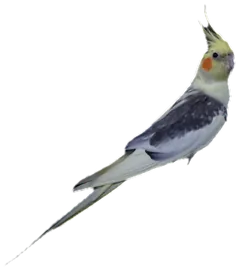 2Cockatiellong 35 cm (14 in)
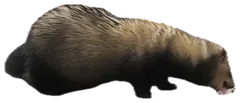 3Ferretlong (head and body) 50 cm (20 in)
 4Guinea piglong 25.4 cm (10 in)
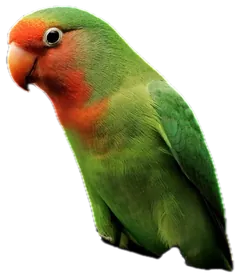 5Lovebirdslong 15 cm (6 in)
Before it arrives
- At least two ferrets (no more than four together, ideally littermates), all neutered or with a hormone implant
- A ferret-proofed home, because it needs several hours a day of play outside its enclosure
- A big enclosure with hammocks, or a sleeping box lined with a T-shirt
- A litter box away from food and bed, with non-clumping cat litter
- Heavy or clip-on bowls and a water bottle: they tip everything over
- Ferret kibble, always available
- A dry, draft-free spot at 15–21 °C (59–70 °F): they don't sweat and suffer in the heat
- A vet who knows ferrets, found before you get them
Its home: temperature and light
- The room
- 15–23 °C (59–73 °F)
What it eats and how often
meat-based ferret food, always available
- Adults: every day
Meat-based ferret kibble (35–40% protein, low in carbs and fiber): weigh out the day's portion and leave it out, so it can eat whenever it wants. Treats only meat or egg, like a bit of cooked chicken or hard-boiled egg. No sugar, fruit, vegetables or dairy.
Vaccines and checkups
Distemper: as a kit at about 8, 11 and 14 weeks, then boosters every 1 to 3 years depending on the vaccine (in the UK, PDSA says every year). Rabies: in the EU, required to travel to another country (EU pet passport); in the US, from 3 months of age, then as state law requires. One vaccine at a time, and stay 20 to 30 minutes at the vet after the shot: reactions are common.
A checkup at the vet every year. At least once a year, ideally every 6 to 12 months, with a vet who knows ferrets.
The care calendar
What to do, from the most frequent to the least.
- every dayFresh food and waterWeigh out the day's portion of complete ferret food and leave it out to graze. Fresh water at all times. No sugar, fruit or dairy.
- every weekWash bedding and hammocksClean the litter tray, the bowls and the toilet area every day.
- every 2 weeksTrim its nailsEvery 1 to 2 weeks. Check its ears too: for mites every week, a clean once a month.
- every monthParasite protectionFor heartworm, where there are mosquitoes, a preventive all year round; fleas and ticks as your vet advises. Intestinal worms are rare.
- every yearVaccinesAsk your vet which ones are due: distemper (every 1 to 3 years depending on the vaccine) and rabies if you travel or the law requires it. One vaccine at a time.
- every yearCheck-up at the vetAt least once a year, ideally every 6 to 12 months, with a vet who knows ferrets.
Call the vet right away if…
If you see one of these signs, call your vet now: don’t wait for it to pass.
- Weak back legs or staggering, a blank stare, drooling, or pawing at its mouth
- Hasn't eaten or drunk for 24 hours, or strains but can't poop
- Blood in its urine, or strains but can't pee
- Thick black stools, or bloody, foul-smelling or nonstop diarrhea
- Bluish or white gums or tongue, or trouble breathing
Frequently asked questions
How long does a ferret live?
Usually 6–10 years.
How big is a ferret?
An adult is up to 40.6 cm (16 in) long, head and body.
How much does a ferret weigh?
An adult usually weighs 500 g (1.1 lb) to 2 kg (4.4 lb).
What does a ferret eat, and how often?
Meat-based ferret food, always available. Meat-based ferret kibble (35–40% protein, low in carbs and fiber): weigh out the day's portion and leave it out, so it can eat whenever it wants. Treats only meat or egg, like a bit of cooked chicken or hard-boiled egg. No sugar, fruit, vegetables or dairy. Adults: every day.
Does a ferret need vaccines?
Distemper: as a kit at about 8, 11 and 14 weeks, then boosters every 1 to 3 years depending on the vaccine (in the UK, PDSA says every year). Rabies: in the EU, required to travel to another country (EU pet passport); in the US, from 3 months of age, then as state law requires. One vaccine at a time, and stay 20 to 30 minutes at the vet after the shot: reactions are common.
When should a ferret see a vet right away?
Right away if you see one of these signs: weak back legs or staggering, a blank stare, drooling, or pawing at its mouth; hasn't eaten or drunk for 24 hours, or strains but can't poop; blood in its urine, or strains but can't pee. The others are above, in “Call the vet right away if…”.
How old is a ferret in human years?
There’s no serious human-years chart for a ferret: the ones online don’t cite sources. What counts is where it is in its life: its senior years start at about 4.5 to 7.5 years old.
Tools for your ferret
Always ask your vet: this site helps you understand, it doesn’t replace a checkup.
Sources
- RSPCA, Ferret environment (checked on September 30, 2026)
- PDSA, Ferrets as pets (checked on September 30, 2026)
- American Ferret Association, Frequently asked questions (checked on September 30, 2026)
- Merck Veterinary Manual, Description and Physical Characteristics of Ferrets (checked on October 13, 2026)
- Merck Veterinary Manual, Management of Ferrets (checked on October 13, 2026)
- Merck Veterinary Manual, Routine Health Care for Ferrets (checked on October 13, 2026)
- Italian Ministry of Health (Ministero della Salute), pet passport for dogs, cats and ferrets traveling in the EU (checked on October 13, 2026)
- Animal Legal & Historical Center (Michigan State University), Table of State Rabies Vaccination Laws (checked on October 14, 2026)
- Merck Veterinary Manual, Infectious Diseases of Ferrets (checked on October 13, 2026)
- Merck Veterinary Manual, Endocrine Disorders of Ferrets (checked on October 13, 2026)
- Merck Veterinary Manual, Hormonal Disorders of Ferrets (checked on October 13, 2026)
- Merck Veterinary Manual, Emergencies of Ferrets (checked on October 13, 2026)
- Merck Veterinary Manual, Providing a Home for a Ferret (checked on October 13, 2026)
- RSPCA, Ferret company (checked on October 13, 2026)
- Animal Diversity Web, Mustela putorius furo (checked on October 13, 2026)