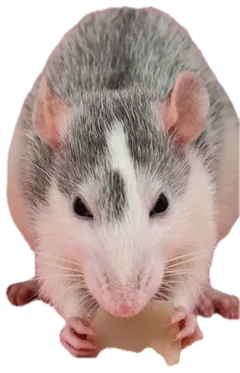
Pet rat: lifespan, size, diet and care
Rats are smart and social: a rat kept alone can become withdrawn and low.
Take the quiz: is it right for you?
How big it is
An adult is up to 28 cm (11 in) long, head and body.
Zoomed ×4: here you see the man up to 47.5 cm (19 in) off the ground
 1Guinea piglong 25.4 cm (10 in)
 2Lovebirdslong 15 cm (6 in)
 3Pet ratlong (head and body) 45 cm (18 in)
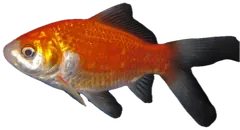 4Goldfishlong 25 cm (10 in)
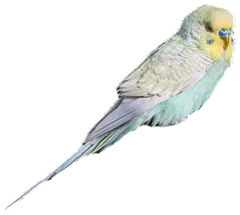 5Budgieslong 20 cm (8 in)
Before it arrives
- At least two rats of the same sex, ideally siblings: never alone
- A big multi-level cage (ferret or chinchilla cages work), with a solid floor, not wire mesh
- Hammocks, ropes, ladders, tunnels and hides at different heights
- Dust-free bedding; never cedar or pine shavings, newspaper or cotton wool
- Rat nuggets and a kitchen scale to weigh them
- Ceramic bowls (not metal) and several water bottles, so they can all drink at once
- A spot at 19–23 °C (66–73 °F), with no drafts, away from bathrooms, TVs and computers (they make ultrasound)
Its home: temperature and light
- The room
- 18–26 °C (64–79 °F)
What it eats and how often
rat pellets plus a little fruit and vegetables every day
- Adults: every day, 2 meals a day
Rat nuggets weighed out every day, following the amount on the bag, split between morning and evening. Only a little fruit and vegetables, as part of the day's allowance, not on top of it. If food is left over or the rat is getting fat, give a bit less.
Vaccines and checkups
None: there are no vaccines for rats or other small rodents.
A checkup at the vet every year. With a rat-savvy vet.
The care calendar
What to do, from the most frequent to the least.
- every dayFresh food and waterWeighed rat nuggets and a little fresh veg, morning and evening. Remove leftovers and check the water bottles.
- every weekTeeth and body checkFront teeth, eyes and nose; feel its body for new lumps. Every day, watch them morning and evening.
- every weekWeigh-inUse a gram scale and note the weight, when you clean the cage.
- every weekDeep clean the cageSpot-clean every day. Put back a little of the old nesting material if it's clean.
- every yearYearly check-up at the vetWith a rat-savvy vet.
Call the vet right away if…
If you see one of these signs, call your vet now: don’t wait for it to pass.
- Sneezes often, snuffles, or breathes noisily or with effort
- Red-brown staining or crusts around the eyes or nose, especially if heavy or recurring
- A new lump, especially on the belly or chest
- Head tilt, circling or loss of balance
- Loses weight, sits hunched with a scruffy coat, or its front teeth look too long
Frequently asked questions
How long does a rat live?
Usually 2–3 years.
How big is a rat?
An adult is up to 28 cm (11 in) long, head and body.
How much does a rat weigh?
An adult usually weighs 200 g (7.1 oz) to 650 g (1.4 lb).
What does a rat eat, and how often?
Rat pellets plus a little fruit and vegetables every day. Rat nuggets weighed out every day, following the amount on the bag, split between morning and evening. Only a little fruit and vegetables, as part of the day's allowance, not on top of it. If food is left over or the rat is getting fat, give a bit less. Adults: every day, 2 meals a day.
Does a rat need vaccines?
None: there are no vaccines for rats or other small rodents.
When should a rat see a vet right away?
Right away if you see one of these signs: sneezes often, snuffles, or breathes noisily or with effort; red-brown staining or crusts around the eyes or nose, especially if heavy or recurring; a new lump, especially on the belly or chest. The others are above, in “Call the vet right away if…”.
How old is a rat in human years?
There’s no serious human-years chart for a rat: the ones online don’t cite sources. What counts is where it is in its life: its senior years start at about 1.5 to 2.3 years old.
Tools for your rat
Always ask your vet: this site helps you understand, it doesn’t replace a checkup.
Sources
- RSPCA, Rat environment (checked on September 30, 2026)
- PDSA, Rats as pets (checked on September 30, 2026)
- National Fancy Rat Society, Keeping rats as pets (checked on September 30, 2026)
- Merck Veterinary Manual, Description and Physical Characteristics of Rats (checked on October 13, 2026)
- Merck Veterinary Manual, Overview of Rodents (table: Biological Data of Pet Rodents) (checked on October 13, 2026)
- RSPCA, Rat diet (checked on October 13, 2026)
- Merck Veterinary Manual, Routine Health Care of Rats (checked on October 13, 2026)
- RSPCA, Rat health (checked on October 13, 2026)
- RSPCA, Rat company (checked on October 13, 2026)