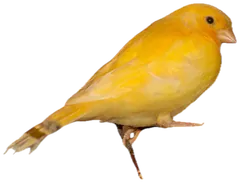
Canary: lifespan, size, diet and care
Smoke, overheated non-stick pans and air fresheners can kill it: never in the kitchen, and keep the room at 18–20 °C (64–68 °F).
Take the quiz: is it right for you?
How big it is
An adult is up to 20 cm (8 in) long.
Zoomed ×8: here you see the man up to 23.8 cm (9 in) off the ground
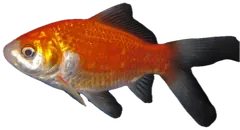 1Goldfishlong 25 cm (10 in)
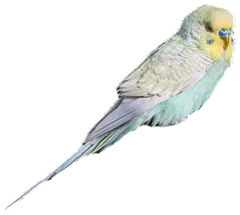 2Budgieslong 20 cm (8 in)
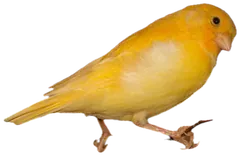 3Canarylong 20 cm (8 in)
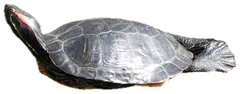 4Red-eared slidershell 29 cm (11 in)
 5Hamsterlong (head and body) 18 cm (7 in)
Before it arrives
- Best as a pair: the German Animal Welfare Federation says never keep one alone (two, or a group of at least four), while Merck says canaries are territorial and do well alone or in pairs
- An aviary at least 2 m long, 1 m wide and 2 m high (about 6.5 × 3.3 × 6.5 ft) for 2 to 6 canaries; at the very least, a cage where it can stretch its wings in every direction
- Natural branches of different thicknesses as perches; no mirrors, fake birds or sandpaper perches
- Several feeders and water bottles (ideally one per bird) and a bath dish
- Paper on the floor and a lamp with UVA and UVB if it lives only indoors
- Good seed or pellets, a cuttlebone and grit
- A bright, quiet spot at 18–20 °C (64–68 °F), never the kitchen, with no smoke, air fresheners or overheated non-stick pans
- A safe room where it can fly free every day, for a few hours
Its home: temperature and light
- The room
- 18–20 °C (64–68 °F)
- Light
- 12–14 hours a day
- UVB lamp
- needed
What it eats and how often
1–2 teaspoons of seed a day, plus vegetables and cuttlebone
- Adults: every day
One to two teaspoons of good-quality seed per canary a day (or complete pellets, which the RVC says are better balanced), plus fresh herbs and vegetables, very little fruit, a cuttlebone for calcium and a little grit. Remove old food every day.
Vaccines and checkups
Usually none: there are a few bird vaccines, but most pet birds don't get vaccinated. Ask your vet.
A checkup at the vet every year. Once a year, with an avian vet.
The care calendar
What to do, from the most frequent to the least.
- every dayFresh food and waterFresh water every day; remove old food and wash the bowls and water bottle.
- every dayCage paperChange the cage paper every day: it lets you check the droppings.
- every weekWeigh-inWith a digital gram scale: if the weight changes by more than 10%, see the vet.
- every weekBath timeA dish of fresh water to bathe in, once or twice a week or more: they enjoy it.
- every weekFull clean of the cageAt least once a week, with a bird-safe disinfectant.
- every 6 monthsUV lampIf it lives only indoors it needs a lamp with UVA and UVB: replace it after 6 to 12 months, as the brand says.
- every yearCheck-upOnce a year, with an avian vet.
Call the vet right away if…
If you see one of these signs, call your vet now: don’t wait for it to pass.
- Sits fluffed up, tired and quieter than usual
- Breathes heavily or with its tail bobbing
- Sits on the cage floor or can't stay on the perch
- Diarrhea, blood in the droppings, or far fewer droppings than usual
- Has lost more than 10% of its weight, or eats and drinks much less
Frequently asked questions
How long does a canary live?
Usually 10–15 years.
How big is a canary?
An adult is up to 20 cm (8 in) long.
How much does a canary weigh?
An adult weighs under 50 g (1.8 oz).
What does a canary eat, and how often?
1–2 teaspoons of seed a day, plus vegetables and cuttlebone. One to two teaspoons of good-quality seed per canary a day (or complete pellets, which the RVC says are better balanced), plus fresh herbs and vegetables, very little fruit, a cuttlebone for calcium and a little grit. Remove old food every day. Adults: every day.
Does a canary need vaccines?
Usually none: there are a few bird vaccines, but most pet birds don't get vaccinated. Ask your vet.
When should a canary see a vet right away?
Right away if you see one of these signs: sits fluffed up, tired and quieter than usual; breathes heavily or with its tail bobbing; sits on the cage floor or can't stay on the perch. The others are above, in “Call the vet right away if…”.
How old is a canary in human years?
There’s no serious human-years chart for a canary: the ones online don’t cite sources. What counts is where it is in its life: its senior years start at about 7.5 to 11.3 years old.
Tools for your canary
Always ask your vet: this site helps you understand, it doesn’t replace a checkup.
Sources
- Merck Veterinary Manual, table “Popular Pet Birds” (checked on October 13, 2026)
- Royal Veterinary College, “Canary care and advice” (2022) (checked on October 13, 2026)
- German Animal Welfare Federation (Deutscher Tierschutzbund), “Canaries” (checked on October 13, 2026)
- RSPCA, Pet birds: environment (checked on October 14, 2026)
- Merck Veterinary Manual, Importance of Veterinary Care in Pet Birds (checked on October 13, 2026)
- Association of Avian Veterinarians, Basic Care for Companion Birds (PDF) (checked on October 13, 2026)
- Association of Avian Veterinarians, Signs of Illness in Companion Birds (PDF) (checked on October 13, 2026)
- Association of Avian Veterinarians, Ultraviolet Light as a Critical Component of Companion Bird Husbandry (PDF, 2024) (checked on October 13, 2026)
- Merck Veterinary Manual, Signs of Illness in Pet Birds (checked on October 13, 2026)
- Bratislava Zoo, domestic canary (checked on October 13, 2026)